
Key Takeaways for Sweepstakes Casinos by States
-
Broad split: A majority of states allow operation, less have prohibited/under-review statutes, and about a dozen states do not provide operation.
-
Eighteen states currently restrict or prohibit operation: California, Connecticut, Delaware, Idaho, Illinois, Indiana, Louisiana, Maine, Maryland, Michigan, Montana, Nevada, New Jersey, New York, Oklahoma (ban effective Nov 1, 2026), Tennessee, Washington, and West Virginia. States range from outright statutory bans (such as New York, which passed a complete ban with S5935A in December 2025) to regulator enforcement, such as cease-and-desist letters, under existing gambling law without a stand-alone sweepstakes statute.
-
Usually there are 3 things to be verified before you can play: Your physical location, which age law applies to you (18 or 21), and prize redemption availability in your location. Good thing to know here for phsical location, not your billing address, it is place where you are.
-
Location trumps residency: As of time of play and/or prize redemption, location determines eligibility. Therefore, you may be ineligible to play as a citizen of an accepting state if you are traveling through a state that does not allow it.
-
Blocked does not necessarily mean prohibited: Some states are blocked due to definitive legal action, others simply because companies chose to withdraw from the market after receiving pressure.
Sweepstakes Casino Legality by State, Current Map and Status Categories
Below is a sweepstakes casinos main legality matrix by states. Jurisdictions are grouped into three status categories: permitted, restricted or unavailable, and prohibited. Sweepstakes casinos are widely available in most states, including Texas, Florida, Ohio, and Georgia, where new sweepstakes casinos regularly launch alongside established ones.
Eighteen states currently restrict or prohibit them. Most do so through explicit statutes signed in 2025–2026. Several (Delaware, Idaho, Illinois, Maryland, Michigan, Nevada, Washington, and West Virginia) do so through existing gambling law or regulator enforcement rather than a dedicated sweepstakes ban.
See the full table below for your state. Each row is meant to serve as a research starting point, not a legal determination. Double check with the state’s official resource before you take any action based on this information. Sweepstakes casino legality by state changes too frequently for this list to remain up to date.
| State | Status | Basis for Status |
|---|---|---|
| Alabama | Permitted | No explicit prohibition |
| Alaska | Permitted | No explicit prohibition |
| Arizona | Permitted (watch for change) | No targeted ban to date |
| Arkansas | Permitted | No explicit prohibition |
| California | Prohibited | Statute (AB 831, effective Jan 1, 2026) |
| Colorado | Permitted | No explicit prohibition |
| Connecticut | Prohibited | Statute (SB 1235, Oct 2025) |
| Delaware | Restricted | Regulator cease-and-desist enforcement; major operators have exited |
| Florida | Permitted | No explicit prohibition |
| Georgia | Permitted | No explicit prohibition |
| Hawaii | Permitted | No explicit prohibition |
| Idaho | Restricted | Constitutional ban on casino-style simulations (redemption blocked) |
| Illinois | Restricted | IGB/Attorney General cease-and-desist letters to 65 operators (Feb 2026); no statewide ban |
| Indiana | Prohibited | Statute (HB 1052, signed Mar 2026; effective Jul 1, 2026) |
| Kansas | Permitted | No explicit prohibition |
| Kentucky | Permitted | No explicit prohibition |
| Louisiana | Prohibited | Statute (HB 53/HB 883, signed May 2026; effective Aug 1, 2026) |
| Maine | Prohibited | Statute (LD 2007, Public Law 2025, ch. 645; effective Jul 29, 2026) |
| Maryland | Restricted | MLGCA cease-and-desist enforcement; two 2026 ban bills (HB 295, HB 1226) passed the House but died in Senate committee; renewed attempt expected in 2027 |
| Massachusetts | Permitted (watch for change) | No targeted ban to date |
| Michigan | Restricted | Gaming Control Board enforcement |
| Minnesota | Permitted (watch for change) | 2026 ban bill failed; no targeted ban to date |
| Mississippi | Permitted (watch for change) | 2026 ban bill (SB 2104) failed; no targeted ban to date |
| Missouri | Permitted | No explicit prohibition |
| Montana | Prohibited | Statute (SB 555, signed May 12, 2025; effective Oct 1, 2025) |
| Nebraska | Permitted | No explicit prohibition |
| Nevada | Restricted | SB 256 (effective Oct 1, 2025) strengthens existing gambling law (NRS 463) |
| New Hampshire | Permitted | No explicit prohibition |
| New Jersey | Prohibited | Statute (A5447, signed Aug 15, 2025) |
| New Mexico | Permitted | No explicit prohibition |
| New York | Prohibited | Statute (S5935A/AB 6745, Chapter 605, signed Dec 5, 2025) |
| North Carolina | Permitted (watch for change) | No targeted ban to date |
| North Dakota | Permitted | No explicit prohibition |
| Ohio | Permitted | No explicit prohibition |
| Oklahoma | Prohibited | Statute (SB 1589, veto override May 14, 2026) |
| Oregon | Permitted | No explicit prohibition |
| Pennsylvania | Permitted | No explicit prohibition |
| Rhode Island | Permitted | No explicit prohibition |
| South Carolina | Permitted | No explicit prohibition |
| South Dakota | Permitted | No explicit prohibition |
| Tennessee | Prohibited | Statute (SB 2136/HB 1885, signed May 22, 2026) |
| Texas | Permitted | No explicit prohibition |
| Vermont | Permitted | No explicit prohibition |
| Virginia | Permitted (watch for change) | No targeted ban to date |
| Washington | Prohibited | Statute (RCW 9.46.240, Class C felony) |
| Wisconsin | Permitted | No explicit prohibition |
| Wyoming | Permitted | No explicit prohibition |
Why a State Becomes Restricted, Statute, Enforcement, or Operator Caution
Restrictions placed upon a state by either the legislature or another source can only come from one of three avenues: a statute passed by the legislature, regulatory or attorney general pressure to enforce existing statutes, or voluntary exit by the platform itself. Statutes can only be undone by other passed statutes, but voluntary exits can stop taking effect as soon as the platform changes its risk assessment.
Explicit Statutory Prohibitions
Legal prohibitions are the most difficult type of prohibition to circumvent, as they can only be lifted by amending the law through the legislature. States typically ban sweepstakes casino games by prohibiting prize-based games of chance, directly criminalizing certain forms of online gambling, or restricting the legal definition of a contest to exclude the acceptance of dual-currency prizes. Washington RCW 9.46.240, which classifies the transmission of gambling information over the Internet as a Class C felony, is the best-known example of this approach. New York S5935A (Section 605), enacted on December 5, 2025, is a more recent example that completely prohibits dual-currency prize mechanisms. The law took effect immediately, and operators and affiliated businesses may be subject to fines of up to $100,000 per violation. If a specific law regarding sweepstakes mechanisms already exists in a state, always provide a direct link to that law rather than simply stating that “it is illegal there”; minor changes in wording can determine whether the free entry option is valid.
Attorney General Actions and Regulatory Pressure
One way for states to lose market access is through actions of the Attorney General or regulatory measures. These do not necessitate the passage of any new bills, and include cease and desist letters, guidances on enforcement, and public warning notices issued from the AG’s office or the state’s official gaming board. These can alter who does business in a state just as easily as legislation can. Michigan’s Gaming Control Board provided the starkest example of this trend lately: regulation, not new laws, pushed platforms out of the state.
Voluntary Exits Based on Legal Risk
The third option is voluntary exit for commercial reasons. Occasionally, a platform will blacklist a state where there is no ban due to uncertainty with prize law, conflicting interpretations of sweepstakes law, or unwillingness of payment processing partners to service that market. This is how two competing platforms can have different views on the same state: one chooses to service that state, while another excludes it. When a state is exited on concerns over legal risk, that does not mean there was some type of formal ban enacted. What it does mean is that the platform itself felt the risk of staying was too great. These exits can be short-lived though, often reversed within the same legislative session when the question is settled.
State-by-State Breakdown: Understanding Each Jurisdiction
The three status categories above break down into five clusters based on legal foundation and enforcement of location restrictions: generally permitted (Florida, Texas, Georgia), permitted, watch for change (North Carolina, Arizona, Pennsylvania), restricted by enforcement (Delaware, Illinois, Maryland, Michigan, Nevada, West Virginia), prohibited by statute (Washington, New York, New Jersey, California, Connecticut, Indiana, Maine, Louisiana, Tennessee, Oklahoma, Montana), or redemption blocked under existing law (Idaho). You can locate your state in the table below and check the item listed under “What to Verify First”.
| Cluster | Example States | Legal Basis | Geolocation Strictness | What to Verify First |
|---|---|---|---|---|
| Generally permitted, large market | Florida, Texas, Georgia, Ohio,Pennsylvania | No targeted prohibition | Standard IP plus device checks | Redemption availability and age gate on the specific platform |
| Permitted, watch for change | North Carolina, Virginia, Arizona, Pennsylvania, Iowa | No ban yet; legislative attention possible | Standard to strict | Whether new bills have altered the position since your last check |
| Restricted by enforcement | Michigan, Nevada, Maryland, Illinois, Delaware, West Virginia | Regulator or attorney general pressure | Strict, often full geofence | Current official regulator notice, not platform marketing |
| Prohibited by statute | Washington, Montana, New Jersey, New York, California, Connecticut, Indiana, Maine, Louisiana, Tennessee, Oklahoma (effective Nov 1, 2026) | Explicit gambling or prize law | Full block at signup | The specific code section before assuming any workaround exists |
| Redemption blocked, not a full ban | Idaho | Constitutional ban on casino-style simulations | Full block on cash-out; play may still be allowed | Whether Gold Coin play is permitted even though SC redemption is not |
The most useful mindset is separating the legality of a state from whether it is permitted by a platform. A permitted state is “this door’s not locked by law”. When a state is excluded with regards to a platform, that means “that door isn’t open to you”.
Legal Age Limits: Why 18+ and 21+ Are Not Legalization
Age restrictions don’t refer to if sweepstakes casinos are allowed. A state can allow the model and still have an 18+ minimum age, or a platform can self impose 21+ just for their market to be safer. Whichever law is more strict (state or platform) will affect you.
- 18+ Model: Baseline for sweepstakes casinos since most states do not regulate gaming promotions.
- 21+ Model: Utilized by some sites as an across-the-board policy. Will be required in states whose gaming culture and related laws trend toward 21.
In order for you to withdraw your winnings, your age is verified as part of the KYC (Know Your Customer) process, which is carried out by all reputable sites. You will be required to submit a government photo ID and some sort of proof of address. This is to verify that you are of the required minimum age and that your account is tied to your actual identity.
How Geolocation and Identity Checks Enforce State Restrictions
Sweepstakes casinos stay compliant by implementing what is called a tiered compliance check. The foundation of this verification process is that it doesn’t matter what address you put down when registering. What matters is where you are located at the time of play and prize redemption. Although you can block a resident of an allowed state from playing while visiting a state that does not permit these casinos by signing into their sweeps casino account, the opposite is also true. Included in the tiered compliance check are:
- IP Address Analysis: Determines your location and network type.
- Device Signals & GPS/WiFi Triangulation (Geofencing):Because mobile sweeps casinos depend on your phone’s location permissions, based on the relevant authorizations in your phone settings and data obtained from nearby cell towers or internet networks, your exact location can be determined.
- Address Verification & KYC: The identification documents you’ve uploaded allow to verify whether the name and address information in your account match.
- Sanctions Screening & Fraud Protection Tools: Simple red flag checks, and sometimes source of funds if prize levels are high.
These control mechanisms determine whether players are physically located in a state where sweepstakes gaming is permitted. If it is determined that you are not, you will either be blocked from playing or your prize withdrawal will be suspended.
Why Using a VPN Often Fails and Invalidates Reward Redemption
Spoofing your location to show yourself in a qualifying state using VPN services will likely get your prizes voided. Sweepstakes casinos use a variety of signals to determine your actual location.If your IP address is identified as using a VPN that does not match your GPS/location data from WiFi, if telemetry shows that your location services are disabled, or if payment methods show billing history from another state, this will tell the operator that you are using VPN. Another red flag for operators is when your KYC data, which includes a mailing address, does not match your claimed location. Contradicting data will lead to your account being frozen, you failing KYC checks, and your prizes becoming void.
Near State Borders or While Traveling
Travel handoffs and border location errors are some of the most common culprits behind false positives. Since location is determined by your physical location at time of play/redeem, simply crossing a state line into a non-permitted state, connecting to hotel WiFi that’s routing through a different state or handing off between towers near a border can cause an otherwise eligible player to be blocked. If you believe this has happened to you, running through this quick verification process will usually clear it up:
- Disable VPN/proxy service completely.
- Enable exact location and allow location on your device for the app/site.
- Join a strong network (Not Public/Shared WiFi) that displays your correct location.
- Try your play/redemption again, ensuring to follow through with the redemption if required once your location is displayed correctly.
Online Sweepstakes Casinos Winnings Taxes by State
Yes, your winnings are taxable even if your state permits sweepstakes casinos. The IRS considers prize winnings promotional income that should be reported on Form 1099-MISC (Box 3) for prizes totaling $2,000 or more (up from $600 before 2026) as this is considered a prize, not a wager. Prizes below that amount are still taxable.
Players will sometimes receive Forms W-2G (used for gambling and wagering winnings) from these sites/third parties in more narrow circumstances depending on how a payout may be classified, but 1099-MISC is issued far more commonly for this specific model.
- Date of each redemption / what prize was declared to be worth.
- Any tax documents provided by the platform, as well as your own records of winnings/redemptions.
- Related supporting documentation; emails/screenshots of redemptions/payments, etc.
How exactly it’s classified is really dependent on the situation(s) you find yourself in, so this is less about providing tax advice for yourself and more about highlighting what you should keep track of. You should consult with a tax professional who can advise you based on your situation.
How to Verify if a Sweepstakes Casino Accepts Players From Your State
Treat legality verification as a recurring habit, not a one-time task before your first signup. Because a state’s status can shift with little notice through statute, enforcement, or a platform’s own decision, run the same four checks below whenever you are unsure, especially before a large redemption or after traveling.
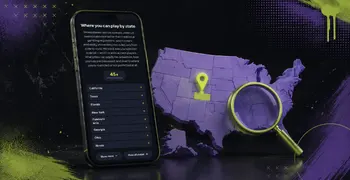 Step 1
Check Your State's Official Status
Start with primary sources, not casino marketing pages. The most reliable references are your state’s gaming regulator website, the attorney general’s office, and the official text of the relevant state statute. If your state appears as “Restricted” or “Permitted (watch for change)”, it doesn’t hurt to double-check. Since enforcement notices and new bills can change the position faster than any published list, information can be updated frequently.
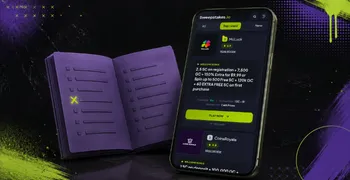 Step 2
Visit the Platforms Listed Excluded-States Pages
Be sure to check the list of states where the casino you want to play at is not permitted, not just the general legal status of the state you’re in. Look for the phrase “Void where prohibited” and the list of eligible/excluded states on the platform’s official rules page. The rules specify the platform’s own voluntary exclusion policies, even in states where there is no government ban. The fact that a state is generally permitted does not guarantee that a specific operator will provide services there.
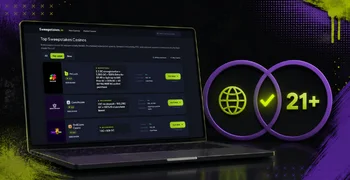 Step 3
Verify Age & Location Restrictions
It’s important to verify age and location requirements together as they are validated in the same step. First, verify if the site is 18+ or 21+ use above under State Age Laws for an explanation on why that age may vary from the states overall law. Second, verify your location will be able to be confirmed with a live geolocation during sign up and once again at redemption and not just rely on the address you give them at sign up. It is a common mistake to assume that the registration address alone is sufficient to determine eligibility.
 Step 4
Check Redemption & Tax Requirements First
Ensure the site will allow you to cash out prizes before you start racking up a balance. That the site offers prize redemption where you live, and be aware that you may have a tax reporting requirement even if your state does allow sweepstakes casinos (see the Taxes section above). This little bit of homework can save you from the biggest disappointment of all: hitting a prize cap, only to find out prizes can’t be claimed where you live or that you now have a reportable balance on your account. Researching ahead of time can turn a sure loss into a choice.
Terms to Look For Before Playing or Redeeming
Terms of use are not there to annoy you, they’re there to protect you as a consumer. A number of sections have direct impact on your ability to play legally and successfully redeem, so keep these sections in mind before you invest time or effort:
Excluded-States and void where prohibited: literally every state the website does not want to deal with. This can be more restrictive than actual state law.
- No purchase necessary route: how to legitimately access the free play mechanism that keeps sweepstakes sites outside the realm of gambling laws. Ensure it works and understand how to access it.
- Redemption thresholds: The amount that must be in your “sweeps” balance to qualify for a reward.
- Rules regarding duplicate accounts: creating additional accounts is one of the most common causes of forfeited balances. One IP or Device or Household is typically allowed one account.
- Promotional prize conditions: Many sites impose various conditions on bonus drawings that do not apply to money earned through gameplay or purchased with real money. These include prize limits, expiration dates, etc.
- Identity Verification Requirements: Which identification documents will trigger the KYC process, and at what stage your balance will be reviewed.
Again notice how the duplicate account rule interacts with family members playing on the same WiFi. Two players from the same house could be considered duplicate accounts and have prizes voided even if both are legitimate accounts. Be sure to read this line if there is more than one player in your household.
Advantages and Disadvantages of the State by State Sweepstakes Model
The state by state model produces a genuinely mixed picture. Its strengths center on access and free entry; its weaknesses center on fragmentation and instability. The table keeps the trade-off legality focused rather than promotional.
New Activity, Legislative Bills, Enforcement Actions, and Expected States to Act
The path forward for 2026 and beyond is not one of greater freedom, but of restriction and regulation. Enforcement measures far outweigh permissive legislative actions. States transitioning from tacit tolerance to enforcement are increasingly being guided by attorney general’s offices and gaming commissions that seek to take a clear stance against the continued expansion of this model. Pay particular attention to states with large markets where the “sweeps” model competes directly with licensed operators for market share, as well as states that already have regulated iGaming environments.
- Legislative Proposals: In many states, bills addressing the dual-currency reward model have been introduced; these bills either explicitly classify the model as gambling under existing laws or introduce narrow exemptions.
- Enforcement: Cease-and-desist letters and public gambling warnings have become more common. Among the best-known examples are the measures taken by the Michigan Gaming Control Board, New York’s rapid transition from cease-and-desist orders to a full legal ban, and Louisiana’s adoption of new statutes in 2026, including adding sweepstakes operations to its racketeering (RICO) law, following a veto in 2025. These developments indicate that states’ approach to online sweepstakes casinos is becoming increasingly strict.
- States to Watch: States with existing regulated online markets and well funded gaming lobbies will likely lead the charge on tightening regulations.
Pay more attention to bill trackers, AG press releases, and GCDB agendas than platform press releases. Also, note that just because a state is okay this quarter, doesn’t mean they won’t change course next quarter. The overall trend is towards clearer regulation.
Play Safely and Responsibly
Even in cases where the “sweeps” model is not legally classified as gambling, it generally falls outside the scope of the rules or regulations governing that industry. That said, harm minimization measures are useful no matter who regulates them, and most reputable sites have adopted policies based on what’s considered “responsible gambling.” Keep an eye out for the following features before investing real money or significant time pursuing additional sweeps currency:
- A self-exclusion option to formally deactivate your account if offered, as well as a cooling-off period option if you simply want to take a break.
- To control how much bonus money you’re purchasing or wagering, deposit limits and maximum bet levels are important. Time limits that control how long you can play; session timeouts are an important part of this.
- A formal complaint process you can use if there are any problems; state consumer protection offices or the attorney general’s office can also play a role if a website isn’t responsive to customer concerns.
Avoid if the terms aren’t clear on which states are ineligible to play, geo-location doesn’t work and you get booted out at random, you can’t view the redemption policies until after you’ve banked a prize fund balance, or you don’t see an option for self-exclusion. In addition to these check points, there are national helplines and websites for many countries. These can also help you be more responsible.
Conclusion: What To Do With This State Legality Information Before You Play
Prior to playing at sweepstakes casino sites, check that your state is legal, know why it is legal, verify you meet minimum age and redemption criteria, and double-check if you travel, as these sites implement geolocation checks to confirm you are in-state. Legal regulations change so frequently from state to state that no list, including this one, should be considered permanent. Sometimes, state legality can change during a quarter. Make checking this list a habit rather than a one-time task.
Frequently Asked Questions
Which States Are Sweepstakes Casinos Legal in?
Sweepstakes casinos are currently permitted in the majority of US states. Approximately a dozen states, such as California, New York, Washington and Louisiana currently limit or prohibit them. Make sure to refer to the comprehensive table above for details on your state, and revisit this page frequently as this list can change many times per year.
Can I Use A Sweepstakes Casino If I Live In A Permitted State But Travel To A Restricted State?
No, you can not. Because the eligibility is judged by your physical location at the moment of play and redemption, not your home or billing address. A resident of a permitted state can still be blocked while standing in a restricted one.
Why Does A Site Block Me When I Live Near A State Border?
Geolocation can misread mobile signals, cell tower handoffs, or WiFi routing near a border, placing you in a restricted state by mistake. This triggers a location verification failure even when you are physically in an eligible state.
Do Sweepstakes Casinos Check Your Location Even If You Are Only Playing With Free Coins?
Yes, they check. Many platforms run geolocation and account checks regardless of which currency you use. Restricted-state rules often apply to account access and future redemption eligibility, not just prize claims.
Are Sweepstakes Winnings Taxable If The Site Is Legal In My State?
Yes, prize winnings are taxable and can carry federal tax reporting obligations even where state access is permitted, typically documented on Form 1099-MISC for prize amounts of $2,000 or more (up from $600 before 2026). Prizes below that amount are still taxable. State treatment varies widely, so a qualified tax professional should interpret your specific situation.
Why Are Some States Marked Restricted If There Is No Clear Ban On The Books?
A restricted label often reflects attorney general pressure, gaming board cease and desist activity, or a platform’s own risk avoidance rather than an explicit statute. Michigan’s Gaming Control Board activity is a clear example of enforcement, not fresh law, driving withdrawals.
Does A VPN Help You Get Around Sweepstakes Casino State Limits?
No, VPN will likely not work because systems verify IP location matches GPS location, device telemetry, payment history, and KYC documents. If those signals conflict, the fine print will typically allow them to terminate your account, fail your verification attempt, or void your prize amount.
Are Sweepstakes Casinos Usually 18 Or Older Only States Where They're Allowed?
Not necessarily, they either have a state or the platforms terms set at 21 or older even if you may be eligible by state age. Whatever state law or platform term is more restrictive applies to you, KYC is verified prior to prize payout.
Before Going To Claim Prizes At A Sweepstakes Casino What Should I Look For?
That your state isn’t blocked from using the site. Make sure your location loads up, you’re above the age limit and have your id’s ready for KYC. Check that you can use the rewards in the state where you live.
How Often Do State Sweepstakes Casino Laws Change?
Frequently. It can happen several times in a quarter. State legality can change with the filing of a bill, action by a regulator (news release) or action by an AG. For the most current information use your state gaming regulator and attorney general’s office websites instead of an outdated list like this one.