
Disclaimer: This page has been prepared for informational purposes only and should not be used as tax, legal or financial advice. Tax results will vary based on your complete financial situation, filing status and state of residency. Please consult a CPA or enrolled agent before using any of this information, especially if you are engaged in large redemptions or a combination of gambling activities.
Key Highlights on Sweepstakes Casino Taxes in 2026
-
Sweepstakes casino prizes are subject to taxation based on fair market value.
-
Typically, prizes will be reported on a Form 1099-MISC, Box 3 (Prizes and Awards).
-
The operator is required to issue a form if they pay you $2,000 or more in a calendar year, up from $600 before 2026.
-
There is typically no deductions. However, if there is an error with your TIN, then they may apply a 24% backup withholding.
-
You can only offset gambling losses against your winnings if you are claiming the income as gambling and you itemize. Even then only 90% of your losses can be claimed in 2026.
-
Most states with state income tax will levy this tax in addition to the federal tax.
How the IRS Classifies Sweeps Coin Redemptions
Sweepstakes casinos fall under a separate category to licensed online casinos under both federal and state laws. They do not require you to pay to play or win. As anyone can simply claim their free Sweeps Coins via daily bonuses, social media promotions and mailings they are classed as a sweepstakes promotion and not gambling. This is why they are reported differently when you redeem them.
Due to the no purchase necessary and AMOE requirements, operators treat these platforms as a promotional sweepstake. This means they will report any redemptions as required by the IRS. According to the Form 1099-MISC instructions, you should report payments made to winners of a non-wagering sweepstake. Most operators will issue a 1099-MISC instead of a W-2G.
What Counts as a Prize When You Redeem Sweeps Coins
The cash, gift card, crypto or merchandise you receive when you redeem Sweeps Coins is your prize. This is taxable income. The redemption and the prize aren’t two separate taxable events. The prize received has a fair market value, which is the amount of taxable income. On your tax forms, and guidance, you will notice that your income is listed as prize income. Operators will give you a 1099-MISC form with the prize income listed. Some tax professionals will consider it gambling winnings. This will affect which section of you tax return it is listed. It will still be taxable income though.

State Income Tax in States Where Sweepstakes Casinos Operate
The table below includes information for states where sweepstakes casinos are currently legal, as also detailed on our sweepstakes casino legality by state hub. As tax rates often change, we’ve only included the tax structure for each state. Always check with your state’s revenue department to ensure you’re using the correct rate when declaring.
| State | Sweepstakes Status | State Income Tax |
|---|---|---|
| Alabama | Permitted | Rate rises with income |
| Alaska | Permitted | No income tax |
| Arizona | Permitted (watch for change) | Same rate for all income |
| Arkansas | Permitted | Rate rises with income |
| Colorado | Permitted | Same rate for all income |
| Florida | Permitted | No income tax |
| Georgia | Permitted | Same rate for all income |
| Hawaii | Permitted | Rate rises with income |
| Iowa | Permitted (watch for change) | Same rate for all income |
| Kansas | Permitted | Rate rises with income |
| Kentucky | Permitted | Same rate for all income |
| Massachusetts | Permitted (watch for change) | Same rate for all income, plus a surtax above $1 million |
| Minnesota | Permitted (watch for change) | Rate rises with income |
| Mississippi | Permitted (watch for change) | Same rate for all income above an exempt amount |
| Missouri | Permitted | Rate rises with income |
| Nebraska | Permitted | Rate rises with income |
| New Hampshire | Permitted | No income tax |
| New Mexico | Permitted | Rate rises with income |
| North Carolina | Permitted (watch for change) | Same rate for all income |
| North Dakota | Permitted | Rate rises with income |
| Ohio | Permitted | Same rate for all income above an exempt amount (new for 2026) |
| Oregon | Permitted | Rate rises with income |
| Pennsylvania | Permitted | Same rate for all income |
| Rhode Island | Permitted | Rate rises with income |
| South Carolina | Permitted | Rate rises with income |
| South Dakota | Permitted | No income tax |
| Texas | Permitted | No income tax |
| Vermont | Permitted | Rate rises with income |
| Virginia | Permitted (watch for change) | Rate rises with income |
| Wisconsin | Permitted | Rate rises with income |
| Wyoming | Permitted | No income tax |
Cash, Gift Card, Crypto, and Merchandise Prizes at Fair Market Value
All types of prizes are taxable at their fair market value (FMV) at the time that you win them, as explained in IRS Publication 525 and IRS Topic 419. The FMV is what you could sell the item for with a willing buyer and willing seller. It may be different from what the operator advertises.
| Prize Type | Taxable Amount | What to Keep |
|---|---|---|
| Cash (Bank Transfer, ACH, Check) | Dollar amount received | Redemption confirmation and bank statement |
| Gift Cards | Face value | Card details and delivery email |
| Crypto | USD value when received, which also becomes your cost basis | Exchange-rate screenshot and wallet transaction ID |
| Merchandise or Travel | What the item actually resells for | Retail listings or appraisals supporting the value |
Crypto and Merchandise Prizes Need Extra Records at Tax Time
There are two taxable events related to crypto redemptions. The first is income tax at the point of receipt. The second is capital gains/losses when you dispose of them. This information must be reported on Form 8949 and Schedule D. If the operator reports that it has given you more value for the merchandise than it could actually be sold for, ensure you have proof. Speak to a tax professional to see how to adjust this on your return as the IRS will compare these figures.
The $2,000 Form 1099-MISC Threshold and When You Still Self-Report
Information reporting requirements and taxes are entirely different. The threshold of Sweeps Coins redemptions determines if you have to report the information to the IRS and me by sending a form. It does not determine if you are liable to pay taxes on the income.
| Tax Year | 1099-MISC Threshold per Operator | What It Means |
|---|---|---|
| 2025 | $600 | Applied to prizes redeemed during 2025 |
| 2026 | $2,000 | Set by the One Big Beautiful Bill Act (P.L. 119-21) |
| 2027 onward | $2,000, indexed for inflation | The exact figure will rise with annual adjustments |
The $2,000 Threshold Applies per Operator, Not per Redemption
The threshold is your overall limit for the year, not for each redemption. For example, six different redemptions valued at $400 from one operator add up to $2,400, which would require you to complete a form. $1,500 from each of three operators add up to $4,500 in taxable income but may not produce a single form. Amounts under $2,000 still belong on your return.
Form W-2G Versus Form 1099-MISC for Sweepstakes Activity
Jackpots at licensed online casinos are reported using the Instructions for Forms W-2G and 5754, while sweepstakes typically use a 1099-MISC. Below is a comparison.
| Form | Usual Use | 2026 Threshold | Withholding | Where It Goes on the Return |
|---|---|---|---|---|
| W-2G | Gambling winnings at licensed casinos and sportsbooks | $2,000 for slots and bingo (up from $1,200); other games vary | 24% regular gambling withholding in certain cases | Schedule 1, line 8b (gambling) |
| 1099-MISC | Sweepstakes and promotional prizes | $2,000 per payer per year | 24% backup withholding only if your TIN is missing or incorrect | Schedule 1, line 8i (prizes and awards) |
How Much Tax You Owe on a $10,000 or $1 Million Redemption
This examples below usesthe 2026 filing brackets and standard deduction amounts published in Rev. Proc. 2025-32. They assume a single filer with $60,000 in wages, the 2026 standard deduction of $16,100 in taxable income, no additional income and no taxes other than federal. As most sweepstakes redemptions fall towards the low end of this bracket, we have started the table just above the $2,000 reporting limit. Your result will vary depending on your filing status, any other income and any credits.
| Redemption | Taxable Income After Prize | Highest Bracket Reached | Extra Federal Tax | Effective Rate on Prize |
|---|---|---|---|---|
| $2,500 | $46,400 | 12% | About $300 | 12% |
| $10,000 | $53,900 | 22% | About $1,550 | 15.5% |
| $100,000 | $143,900 | 24% | About $22,110 | 22.1% |
| $1,000,000 | $1,043,900 | 37% | About $337,180 | 33.7% |
What Happens If You Redeem $10,000
Without any prizes, then you have a taxable income of $43,900, which sits in the 12% bracket. Adding $10,000 will be taxed with $53,900. The first $6,500 of the prize is taxed at 12% and the remainder $3,500 at 22%, because the 22% bracket starts above $50,400 being taxed for single filers in 2026. The additional taxes owed to the federal government will be around $1,550. A year’s total of $10,000 is realistic for a regular player, especially across several platforms. You can also expect to get a 1099-MISC from any operators you got $2,000 or more from and no taxes would have been taken out.
What Happens If You Redeem $1 Million
While very large redemptions are uncommon at sweepstakes casinos (with most capping daily/redemption amounts) and their jackpots are nowhere near the size of lotteries/licensed casinos, we can still calculate the highest bracket. Your taxable income now becomes $1,043,900. Any income above $640,600 will be taxed at 37%. This means the prize will incur approximately $337,180 of federal tax. This is effectively a 33.7% tax rate. As 1099-MISC prizes typically have no tax withheld, the full amount may be payable when you file your taxes.
More typically, a large prize would be $100,000. It pushes taxable income to $143,900 which hits the 24% bracket, giving an extra $22,110 of federal tax. Whatever the amount you should pay estimated tax during the year. You may also have to pay state tax which can add several percent more.
How to Report Sweepstakes Casino Winnings on Your Federal Return
Most reporting errors occur after you redeem on multiple platforms and some of them don’t output a form. The steps below will apply regardless of the amount you have redeemed. It is assumed that the prize income route will be used, as this is the default for 1099-MISC reporting.
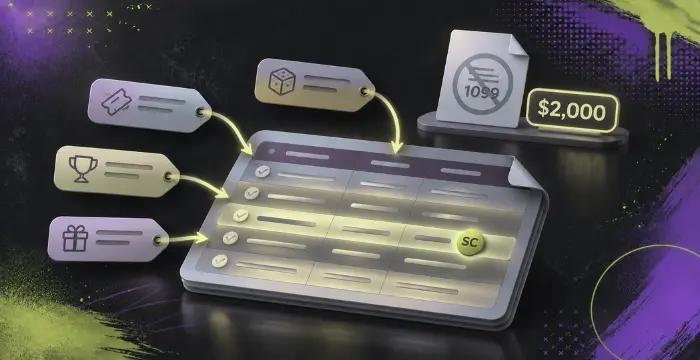 Step 1
Export Your Redemption History from Every Sweepstakes Account
Go on each site you used throughout the year and make sure you can get a copy of your redemption history or transaction history. All these should be put into one spreadsheet that shows the date, amount of SC, USD value, type of prize and payment method. If you redeemed with crypto, you will need to include the USD value at the time the crypto was added to your wallet. Sweepstakes casinos that you won less than $2,000 at won’t send a form, so this is often the only full record you’ll have.
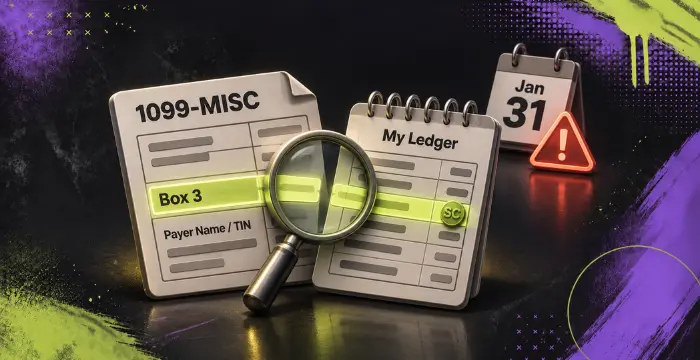 Step 2
Match Your Ledger to Each Form 1099-MISC
Operators usually issue 1099-MISC forms by or before January 31st of the next year. Check the amounts in Box 3, names and TINs of payers on each form. If they’re incorrect, request a new form from support. The most frequent cause of receiving an IRS CP2000 notice is incorrect details in the return compared to what the operator is sending.
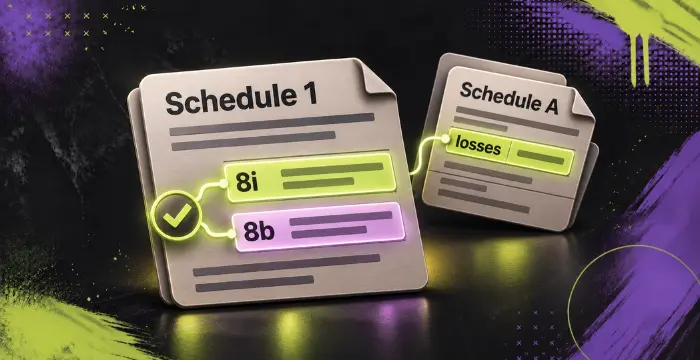 Step 3
Enter Each Prize on the Correct Schedule 1 Line
Report the prize income from Report 1099-MISC on the prizes and awards item on Schedule 1 (line 8i on the 2025 version). If you have any redemptions which didn’t result in a form being issued, add those to this section. If you and your tax professional determine that this activity is gambling, then you will report the income on the gambling income section (8b). You will also report losses on Schedule A, subject to the 2026 limits. Pick an option and be consistent throughout all platforms. Ensure you have a reason for choosing the position you have.
 Step 4
Pay the Balance with Estimated Payments or Extra Withholding
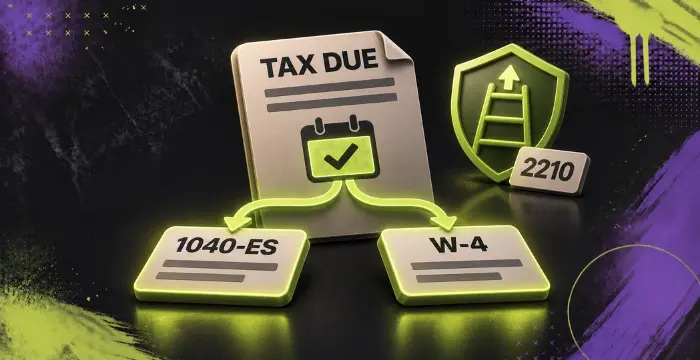
Because prize money typically doesn’t have taxes withheld from it, you should make payments towards it before April. You can either make quarterly estimates using Form 1040-ES, or increase the amount of tax being withheld from your employment by completing a new Form W-4. Taxes withheld from your pay will be considered to have been paid evenly through the tax year. You should make sure that you don’t get hit with an underpayment penalty by paying either 90% of this year’s tax due, or 100% of last year’s tax due (or 110% if your AGI was over $150,000 last year). If you won late in the tax year then you can use the annualized income computation on Form 2210 to reduce or eliminate any penalties.
Deducting Losses and Gold Coin Purchases in 2026
If you receive the SC redemptions as prize income, then you cannot claim any losses. The purchase of Gold Coins will not be deducted from your 1099-MISC and they can’t be claimed by casual players. If you receive your redemption as gambling winnings, you can only claim your losses if you itemize on your Schedule A form. (IRS Topic 419). However, due to section 70114 of the One Big Beautiful Bill Act, only 90% of 2026 losses can be claimed. This means that if you had $20,000 in winnings and $20,000 in losses, you’ll still have to pay tax on $2,000, unless a bill restoring the full deduction, which cleared the House Ways and Means Committee 38–5 on September 16, 2026, passes both chambers and becomes law. With a 2026 standard deduction of $16,100 for single filers and $32,200 for joint filers, most casual players get no benefit from itemizing anyway. It is still a good idea to keep a record of your sessions, especially if you are mixing sports betting, licensed online casinos and sweepstakes.
Fixing a Late 1099 or an Unreported Redemption
A common problems with sweepstakes players is late issues and unreported redemptions. This can happen if you have multiple redemption options at operators, some of which may not issue you a 1099-MISC. If you can fix the issue yourself before the IRS notices, you will avoid paying high interest and penalties. As shown in the table below, you would do the following
| Situation | What to Do |
|---|---|
| A 1099-MISC arrives after you filed | If the income isn't already on your return, file Form 1040-X promptly |
| The amount on the form is wrong | Ask the operator for a corrected form, and keep the correspondence |
| You get a CP2000 notice | Respond by the deadline with your ledger and supporting records |
| You face a large balance with little time to pay | File Form 4868 for an extension to file, but pay what you can by April 15, because an extension doesn't delay the payment due date |
What to Do If Your State Bans Sweepstakes Casinos
When a ban is put into place by your state, you have a limited amount of time to secure your balance and close out your accounts. Below, we have listed the steps you should take when the bill has been signed.
- Read the actual law: You can look up the text of the bill on your State Legislature’s website (or bill tracker), or check out the plain English news summary. This will help you understand what the law actually bans.
- Review if it is a stand-alone law: Some states create a stand-alone law banning sweepstakes whereas others include it within a bigger piece of legislation that also legalizes regulated real money casinos. This means players have a legal option.
- Check the effective date: Some laws come into effect immediately upon being signed by the Governor, whereas others will have an effective date mentioned in the bill. This is usually several months after signing.
- Get your operator’s closing date: Contact customer support to find out when your state will be cut off. Some operators will run until their effective date, others will leave before this.
- Complete ID verification: If this is your first time cashing out, then it is best to complete KYC straight away as queues will build up.
- Cash out early: Finish redeeming your Sweeps Coins early. Processing will be slower than usual, so you are more likely to experience long delays if you leave it until the last few days. Smaller or less known operators may not pay at all.
- Don’t buy any Gold Coin packages after the ban: If you do buy at all, don’t buy at smaller (less well known) brands and don’t buy large amounts at bigger brands either.
- Watch out for early exits: Sometimes operators will leave a state before the ban goes into place, or before any bill is even passed. Be vigilant on all of your platforms.
- Track all final cashouts: If you make a final cashout, you will still be taxed on it. If you make a large redemption, you may exceed $2,000 in total with that one operator, which will mean they have to issue a 1099-MISC.
- Consider legal alternatives: After the ban, review your remaining options such as prediction markets, social casinos, rewards apps, or regulated online casinos.
Bottom Line on Taxes for Sweepstakes Casino Winnings
All sweeps casino redemptions are taxable. While the $2,000 threshold for 2026 determines who sends a form, it is important to keep track of all your redemptions on all platforms. Report them for their fair market value on the correct line of Schedule 1. Pay estimated tax on large wins. Before you file, make sure to check current IRS guidelines, if the 90% loss cap still applies and any state guidelines. If you have a mixture of gambling activity or six-figure redemptions, it is best to speak to a CPA or enrolled agent.
Frequently Asked Questions
Are Sweeps Coin Redemptions Taxable in the US?
Yes, all SC redemptions are considered taxable income under federal law for the fair market value of what you redeem. This is added to your taxes regardless of how you redeem (cash, gift cards, crypto or merchandise) and will show up on your return even if the operator does not send a form.
What Is the Reporting Threshold for Sweepstakes Prizes?
You must receive a Form 1099-MISC from an operator if they pay you $2,000 or more during 2026, up from $600 in 2025. This is not related to taxes. This is reporting requirements.
Do You Still Pay Tax If Your Redemptions Are Under $2,000?
Yes, you will still have to pay tax on any redemptions that fall beneath the threshold. You will have to declare these on schedule 1. Just because you haven’t received a form doesn’t mean you can ignore the income.
Can You Deduct Gold Coin Purchases or Losses from Tax?
No, you can’t. If you’re gambling, you can only claim losses if you itemize and only 90% of losses are allowed for 2026, and you can’t claim more than you won.
How Much Tax Is Withheld from a Sweepstakes Redemption?
Usually nothing. There’s no withholding on prizes listed on a 1099-MISC unless you have 24% backup withholding due to not having or having an incorrect TIN. Plan to pay the tax yourself with estimated payments or by increasing your withholdings on your paycheck.